Now available: WOLT DRIVE - on-demand or time-slotted delivery - fast and reliable
Types of Rolling Papers: Materials, Sizes & How to Choose
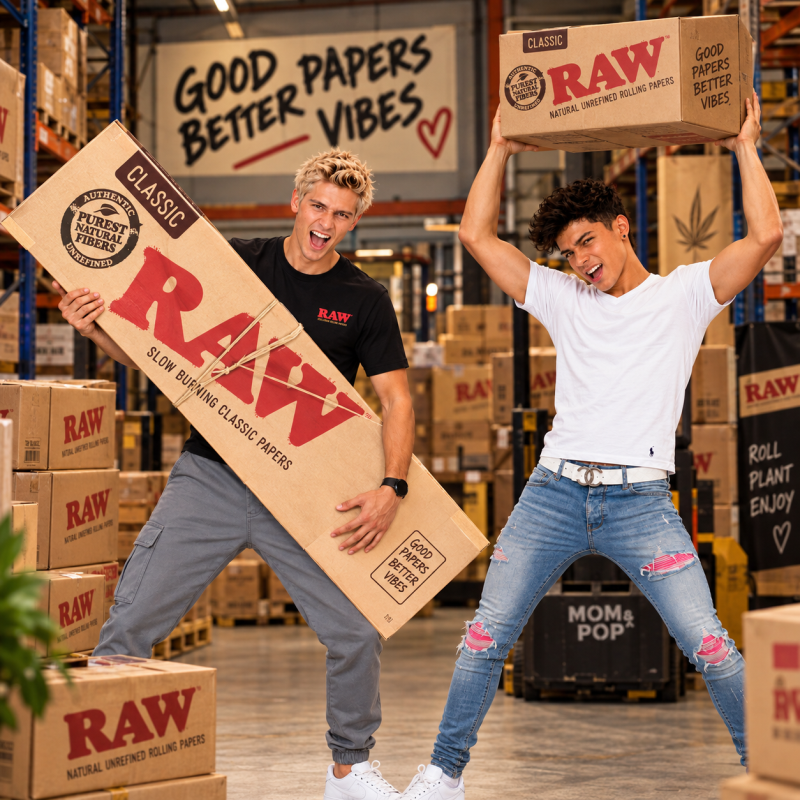
Types of Rolling Papers: Materials, Sizes & How to Choose
Rolling papers may look simple, but there is much more variety than you might expect.
Different rolling papers can be made from hemp, rice, wood pulp, flax or bamboo, and they come in different thicknesses, sizes and finishes. These differences can affect how the paper feels in your hands, how easy it is to roll and how it burns.
If you have ever stood in front of a display of rolling papers wondering what the difference is between hemp and rice papers, what unbleached actually means, or whether you need 1¼, King Size or King Size Slim, this guide is for you.
Here is our simple guide to the most common types of rolling papers and how to choose the right one.
What Are Rolling Papers Made Of?
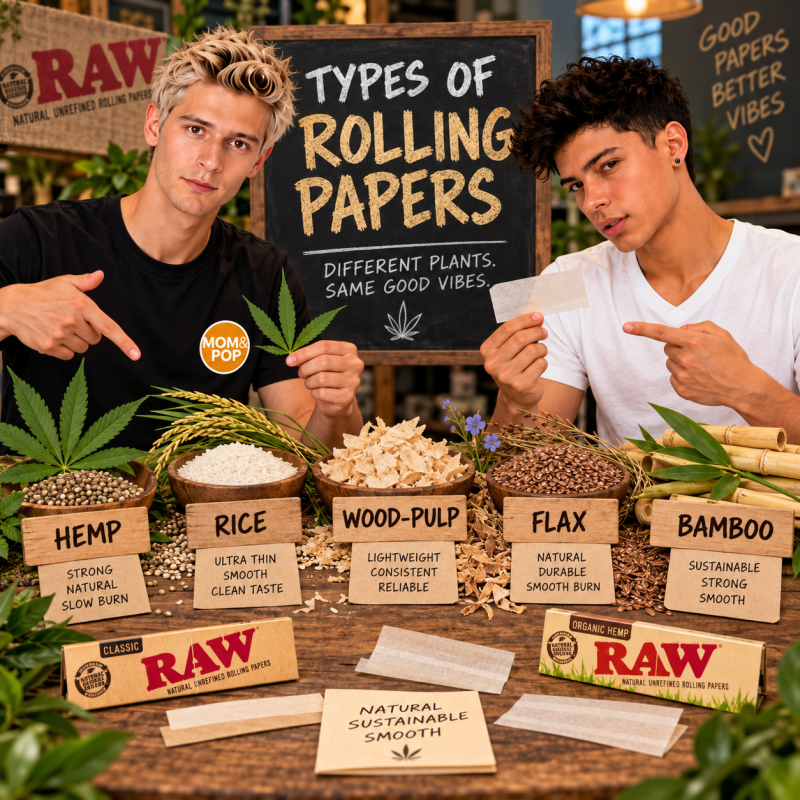
Most rolling papers are manufactured from plant-based cellulose fibres. Common materials include wood pulp, hemp, rice, flax and bamboo.
Each material has slightly different characteristics in terms of thickness, strength, texture and flexibility, which can influence how the paper feels when rolling and how easy it is to work with.
The material is only one part of the paper, however. Thickness, texture, gum, size and manufacturing method can all influence the finished product.
Let's look at the main materials.
1. Hemp Rolling Papers
Hemp rolling papers are made using fibres from the hemp plant and have become a popular alternative to traditional wood-pulp papers.
They generally have a slightly textured surface, which can provide more grip while rolling. Hemp fibres can also be used to produce relatively thin papers while maintaining enough strength for comfortable handling.
Why choose hemp papers?
Hemp papers can be a good choice if you prefer:
- A natural-looking paper
- Good grip when rolling
- A relatively thin but durable paper
- Plant-based hemp fibres
- An alternative to traditional wood-pulp papers
Many hemp papers are also available in an unbleached version, giving them their characteristic light brown or tan appearance.
2. Rice Rolling Papers
Rice rolling papers are particularly well known for being extremely thin and lightweight.
Compared with many traditional papers, rice papers can feel almost transparent. Their low paper weight makes them popular with experienced rollers who prefer as little paper around their roll as possible.
There is a trade-off, though: very thin rice papers can be more delicate and may require a little more practice to handle successfully.
Why choose rice papers?
Rice papers can be a good option if you prefer:
- Very thin paper
- A lightweight feel
- Minimal paper around your roll
- A smooth paper texture
- A more delicate paper and don't mind taking extra care when rolling
For beginners, a slightly more substantial hemp or traditional paper may sometimes be easier to work with.
3. Wood-Pulp Rolling Papers
Wood-pulp papers are among the most traditional types of rolling paper.
They tend to be slightly thicker and more opaque than ultra-thin rice papers. Wood-pulp papers are generally predictable and relatively easy to work with, which is one reason they have been widely used for rolling papers for generations.
Depending on the manufacturer and production process, wood-pulp papers can be white or natural brown.
Why choose wood-pulp papers?
They can be particularly suitable for:
- Beginners learning how to roll
- People who prefer a more substantial paper
- Traditional hand rolling
- Anyone looking for a familiar, classic paper feel
Not all wood-pulp papers are identical, so thickness, texture and appearance can vary considerably between brands and product ranges.
4. Flax Rolling Papers
Flax rolling papers are made using fibres from the flax plant – the same plant traditionally used to produce linen.
Flax fibres can be used to create thin but relatively strong paper, making them suitable for rolling-paper production.
Some manufacturers also combine flax with other plant fibres rather than using it on its own.
Flax papers are therefore worth exploring if you enjoy experimenting with different paper materials beyond the more familiar hemp, rice and wood-pulp options.
Why choose flax papers?
Flax papers may appeal if you prefer:
- A thin paper
- Plant-based fibres
- A smooth feel
- A paper with a balance between thinness and strength
- An alternative to the most common rolling-paper materials
5. Bamboo Rolling Papers
Bamboo rolling papers are made using cellulose fibres derived from bamboo. They are a relatively newer option compared with traditional wood-pulp, rice and hemp papers, but are becoming increasingly available.
Bamboo is a fast-growing plant, which is one reason it has gained attention as an alternative raw material for paper production.
Depending on the manufacturer, bamboo rolling papers can be made relatively thin, smooth and flexible, while still providing enough strength for hand rolling.
Why choose bamboo papers?
Bamboo papers can be worth trying if you prefer:
- A plant-based alternative to traditional paper materials
- A thin and lightweight paper
- A smooth paper texture
- Something different from hemp or rice papers
- Papers made using fast-growing bamboo fibres
As with hemp, rice and wood-pulp papers, the exact characteristics depend on the manufacturer. Bamboo doesn't automatically mean that every bamboo paper will have the same thickness, texture or burn rate.
Bleached vs. Unbleached Rolling Papers
Another term you will frequently see on rolling-paper packaging is unbleached.
But what does it actually mean?
The basic distinction is straightforward.
Bleached or whitened papers have undergone a process to produce their lighter or white appearance, while unbleached rolling papers retain more of their natural brown or tan colour.
Importantly, unbleached is not a type of fibre.
For example, both hemp and wood-pulp papers can be available in bleached or unbleached versions. The colour alone therefore doesn't necessarily tell you what material the paper is made from.
Modern white papers may also use different whitening processes depending on the manufacturer.
So don't automatically assume:
White = one particular type of paper
or
Brown = hemp.
Always check the packaging for the actual material and manufacturing information.
Thin, Ultra-Thin and Regular Rolling Papers
Material isn't the only factor that matters.
Rolling papers are also produced in different thicknesses.
A thinner paper means there is less paper surrounding the contents of the roll. Ultra-thin papers can therefore appeal to experienced rollers looking for a particularly lightweight sheet.
However, thinner isn't automatically better for everyone.
Regular Papers
Regular papers generally have a little more body, making them easier to handle and more forgiving when learning how to roll.
Thin Papers
Thin papers offer a balance between easy handling and reduced paper thickness.
Ultra-Thin Papers
Ultra-thin papers use very little material but can require more careful handling and a more experienced rolling technique.
Your ideal thickness therefore depends largely on personal preference and rolling experience.
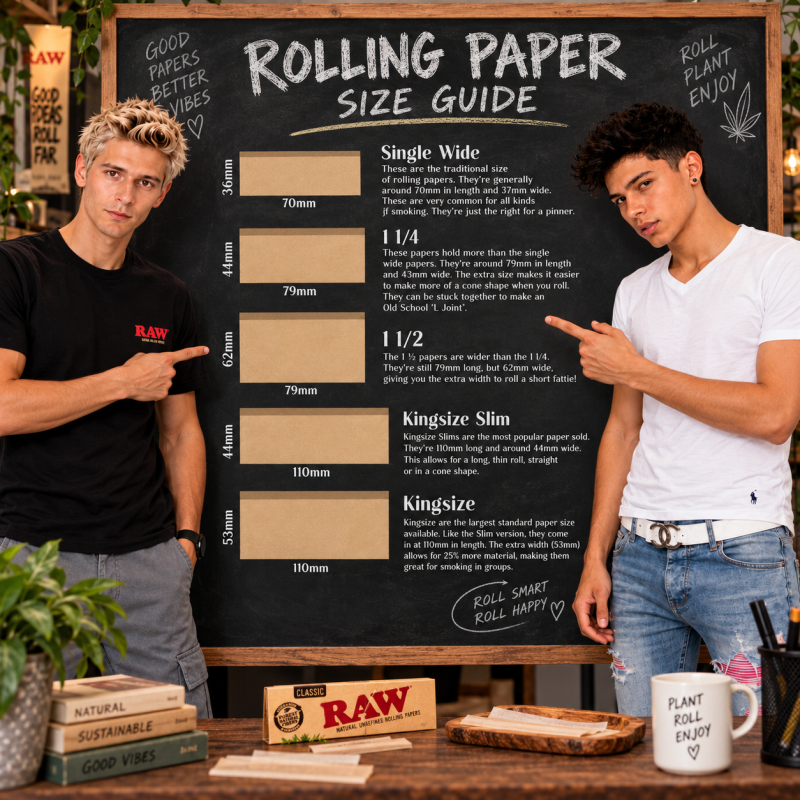
What Are the Different Rolling Paper Sizes?
After choosing a material, the next question is usually size.
There is no single universal standard governing every rolling-paper size, so exact dimensions can vary slightly between manufacturers. Nevertheless, several common formats have become widely recognised.
|
Size |
Typical Dimensions |
General Character |
|
Single Wide |
approx. 68–70 × 34–36 mm |
Small and compact |
|
1¼ |
approx. 76–78 × 44–48 mm |
Popular everyday size |
|
1½ |
approx. 76–79 × 60–63 mm |
Similar length to 1¼ but wider |
|
King Size Slim |
approx. 100–110 × 42–46 mm |
Long but relatively narrow |
|
King Size |
approx. 100–110 × 52–60 mm |
Long and wider |
These measurements are approximate because individual manufacturers may use slightly different specifications.
Single Wide
Single Wide is one of the smaller traditional rolling-paper formats.
It is a good option when you want a compact roll and don't need much paper.
Its smaller dimensions also mean there is less room to work with, so some beginners may find a slightly larger paper easier to handle.
1¼ Rolling Papers
1¼ rolling papers provide additional width compared with Single Wide while remaining relatively compact.
They have become one of the most familiar general-purpose rolling-paper formats and are available from many major rolling-paper manufacturers.
For many people, 1¼ offers a convenient balance between compact size and ease of rolling.
1½ Rolling Papers
The 1½ format is generally similar in length to 1¼ but considerably wider.
The additional width provides more paper to work with and allows for a thicker roll.
King Size Rolling Papers
King Size rolling papers are considerably longer than Single Wide or 1¼ papers.
Depending on the brand, they may also be wider.
The extra dimensions make them suitable when a longer or larger roll is preferred.
King Size Slim Rolling Papers
King Size Slim combines the extra length of King Size with a narrower sheet.
This makes it possible to create a longer roll without having as much excess paper around it.
King Size Slim has become an especially common format in European rolling-paper ranges and is available from many well-known manufacturers.
What About Rolling Paper Rolls?
Not every rolling paper comes as an individual pre-cut sheet.
Rolling paper rolls provide one continuous strip of paper that you cut or tear to the length you want.
This gives you considerably more flexibility over the final size.
Want something approximately King Size? Cut it there.
Want something longer? Keep going.
Paper rolls can therefore be useful for people who regularly switch between different lengths or simply prefer to decide the size themselves.
What Are Pre-Rolled Cones?
Pre-rolled cones offer another alternative to standard flat rolling papers.
Instead of starting with a flat sheet and creating the shape yourself, the paper has already been formed into a cone.
You simply fill the cone and distribute the contents evenly.
This makes cones particularly convenient for people who:
- Are new to rolling
- Have difficulty hand rolling
- Want consistent shapes
- Prefer convenience
- Want to save time
Pre-rolled cones are available in numerous sizes and paper materials, including hemp and other plant-fibre papers.
What Is the Gum on Rolling Papers?
Most conventional rolling papers have a thin adhesive strip along one edge.
This is known as the gum line.
A commonly used adhesive is gum arabic, a natural gum obtained from certain acacia trees. Other plant-based gums may also be used depending on the manufacturer.
The gum line is lightly moistened before the paper is sealed.
The exact gum formulation can vary between manufacturers, so check the product information if the type of adhesive is particularly important to you.
What Are Watermarked Rolling Papers?
Have you ever held a rolling paper up to the light and noticed a pattern running across it?
That's a watermark.
Manufacturers can create patterns or textures in the paper during production. These patterns may form part of the paper's design and can also influence how the paper behaves while burning.
Different brands use different watermark designs, making this one of the less obvious differences between rolling-paper ranges.
Some manufacturers have even developed distinctive watermark patterns that have become recognisable features of their brands.
Flavoured and Coloured Rolling Papers
Rolling papers aren't limited to traditional white or natural brown.
You can also find flavoured rolling papers and papers manufactured in different colours.
Flavoured papers may contain aromas or flavourings designed to add a particular taste or scent, while coloured papers are primarily intended to provide a different visual appearance.
These are more of a speciality product than a traditional everyday paper and won't appeal to everyone.
If you prefer the contents of your roll to determine the flavour rather than the paper, a neutral traditional paper may be the more suitable choice.
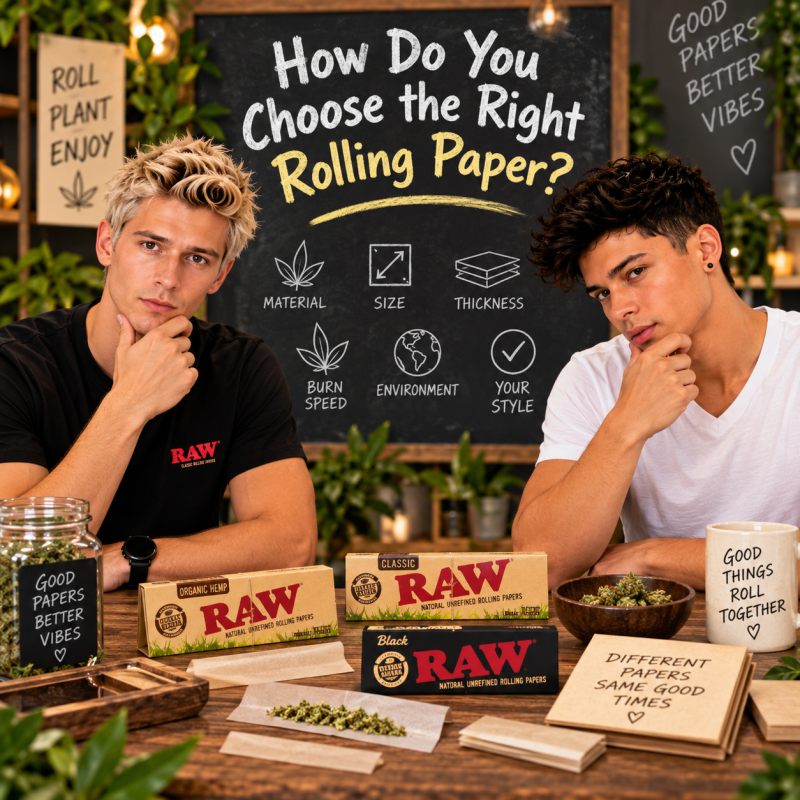
How Do You Choose the Right Rolling Paper?
There isn't one rolling paper that is right for everyone.
Instead, consider a few important factors.
Material
Do you prefer hemp, rice, wood pulp, flax or bamboo?
Each offers a slightly different texture and handling experience.
Thickness
Do you want something robust and easy to handle, or do you prefer a very thin or ultra-thin sheet?
Size
Are you making a small roll, a standard everyday roll or something longer?
The difference between Single Wide, 1¼ and King Size Slim can be significant.
Rolling Experience
Beginners may appreciate a paper with a little more strength and grip, while experienced rollers may prefer very thin papers.
Personal Preference
Ultimately, much of the decision comes down to what feels right in your hands.
Trying a few different combinations is often the easiest way to discover what suits your rolling style.
Hemp vs. Rice Rolling Papers: What's the Difference?
This is one of the most common questions about rolling papers.
In simple terms:
Hemp papers generally offer a little more texture and grip and can be relatively strong for their thickness.
Rice papers are often extremely thin and lightweight but can require more careful handling.
Neither is universally "better".
The right choice depends on whether you prioritise ease of rolling, paper thickness, texture or personal preference.
If you are new to rolling, hemp may be easier to handle. If you already have experience and prefer an especially thin paper, rice may be worth trying.
Bamboo vs. Hemp Rolling Papers
As bamboo papers become more widely available, another comparison you may encounter is bamboo vs. hemp rolling papers.
Both are plant-based paper materials, but they can feel different.
Hemp papers often have a slightly more noticeable texture and grip.
Bamboo papers can have a smoother feel and may be manufactured into thin, lightweight sheets.
However, the characteristics of an individual paper depend heavily on the manufacturer, thickness and production method. Material alone doesn't determine how a rolling paper will perform.
The best way to compare them is to try both in a similar size and thickness.
Which Rolling Paper Is Best for Beginners?
If you're still learning how to roll, don't automatically choose the thinnest paper available.
An ultra-thin paper can look attractive, but it may also be more delicate and difficult to control.
A paper with a little more body and grip can be easier to work with.
A 1¼ hemp or traditional paper, for example, can be a practical starting point. Once your technique improves, you can experiment with thinner papers, rice papers and longer formats such as King Size Slim.
And if hand rolling simply isn't your thing, pre-rolled cones provide an easy alternative.
The Bottom Line
Rolling papers might seem like one of the simplest smoking accessories, but there are surprisingly many options.
The main materials you'll encounter include:
Hemp – Rice – Wood Pulp – Flax – Bamboo
From there, you can choose between bleached and unbleached papers, different thicknesses and sizes ranging from compact Single Wide papers to King Size and King Size Slim.
There are also paper rolls, pre-rolled cones, flavoured papers, coloured papers and speciality papers for anyone looking for something different.
Ultimately, choosing rolling papers comes down to finding the combination of material, thickness, size and handling that works best for you.
Experiment with a few different styles and you may quickly discover that two papers that look almost identical can feel very different when you actually start rolling.
Frequently Asked Questions About Rolling Papers
What are the main types of rolling papers?
Rolling papers are commonly made from hemp, rice, wood pulp, flax or bamboo fibres. They are also available in different thicknesses, colours, finishes and sizes.
Are brown rolling papers always hemp?
No. Brown or tan paper often indicates that the paper hasn't undergone the same whitening process as a conventional white paper. Unbleached doesn't automatically mean hemp. Wood-pulp and other papers can also be unbleached.
Are rice papers thinner than hemp papers?
Rice papers are commonly among the thinnest rolling papers available, although the actual thickness depends on the individual product and manufacturer.
What are bamboo rolling papers?
Bamboo rolling papers are made using cellulose fibres derived from bamboo. They can be manufactured into thin, lightweight and flexible papers and provide another alternative to traditional hemp, rice and wood-pulp papers.
What is King Size Slim?
King Size Slim is a long rolling-paper format, generally around 100–110 mm long, but narrower than many standard King Size papers. Exact dimensions vary between brands.
What's the difference between 1¼ and King Size rolling papers?
A 1¼ paper is typically around 76–78 mm long, while King Size formats are generally around 100–110 mm long. Exact measurements vary between manufacturers.
What are rolling paper rolls?
Rolling paper rolls contain a continuous strip of rolling paper rather than individual pre-cut sheets, allowing you to choose your own paper length.
What is the easiest rolling paper for beginners?
A slightly more robust paper with good grip is generally easier to learn with than an extremely thin, delicate paper. 1¼ hemp papers can be a good starting point, while pre-rolled cones are another convenient alternative.
Are unbleached papers the same as natural papers?
The terms are sometimes used together in product marketing, but they don't necessarily describe the paper's fibre. An unbleached paper may be made from hemp, wood pulp or another plant-based material. Check the manufacturer's specifications to know exactly what the paper contains.Display prices in:EUR